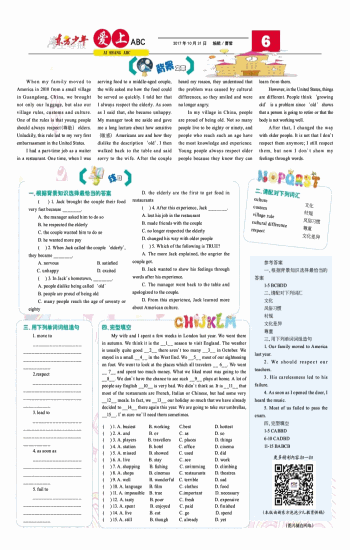
When my family moved to America in 2010 from a small village in Guangdong, China, we brought not only our luggage, but also our village rules, customs and culture. One of the rules is that young people should always respect(尊敬) elders. Unluckily, this rule led to my very first embarrassment in the United States. I had a part-time job as a waiter in a restaurant. One time, when I was serving food to a middle-aged couple, the wife asked me how the food could be served so quickly. I told her that I always respect the elderly. As soon as I said that, she became unhappy. My manager took me aside and gave me a long lecture about how sensitive(敏感) Americans are and how they dislike the description ‘old’. I then walked back to the table and said sorry to the wife. After the couple heard my reason, they understood that the problem was caused by cultural differences, so they smiled and were no longer angry. In my village in China, people are proud of being old. Not so many people live to be eighty or ninety, and people who reach such an age have the most knowledge and experience. Young people always respect older people because they know they can learn from them. However, in the United States, things are different. People think ‘growing old’ is a problem since ‘old’ shows that a person is going to retire or that the body is not working well. After that, I changed the way with older people. It is not that I don’t respect them anymore; I still respect them, but now I don’t show my feelings through words.
|





 放大
放大 缩小
缩小 默认
默认 下一篇
下一篇